Today: from 16:00 to 16:38. Last peak: Sorapiss, 16:39.
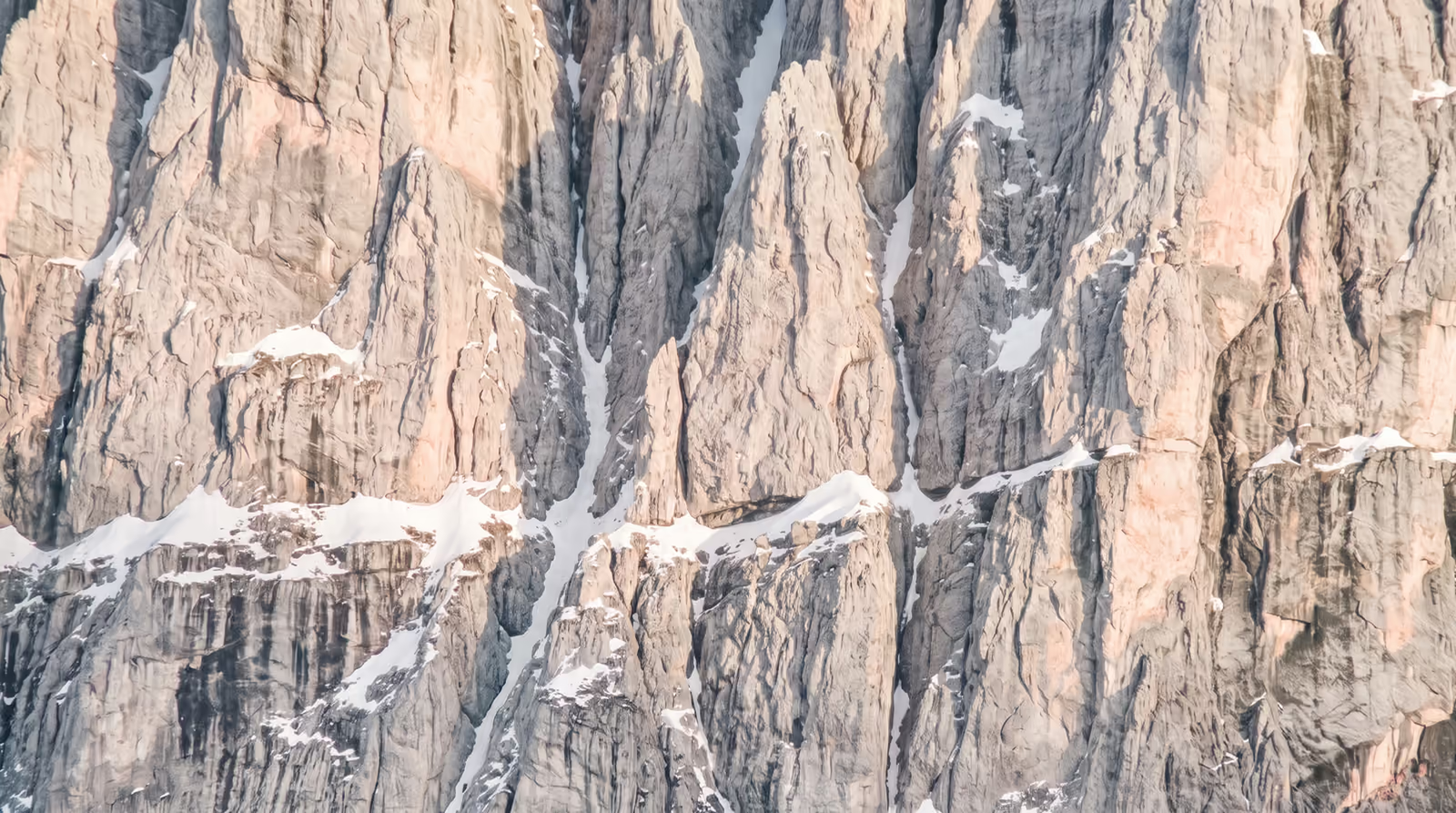
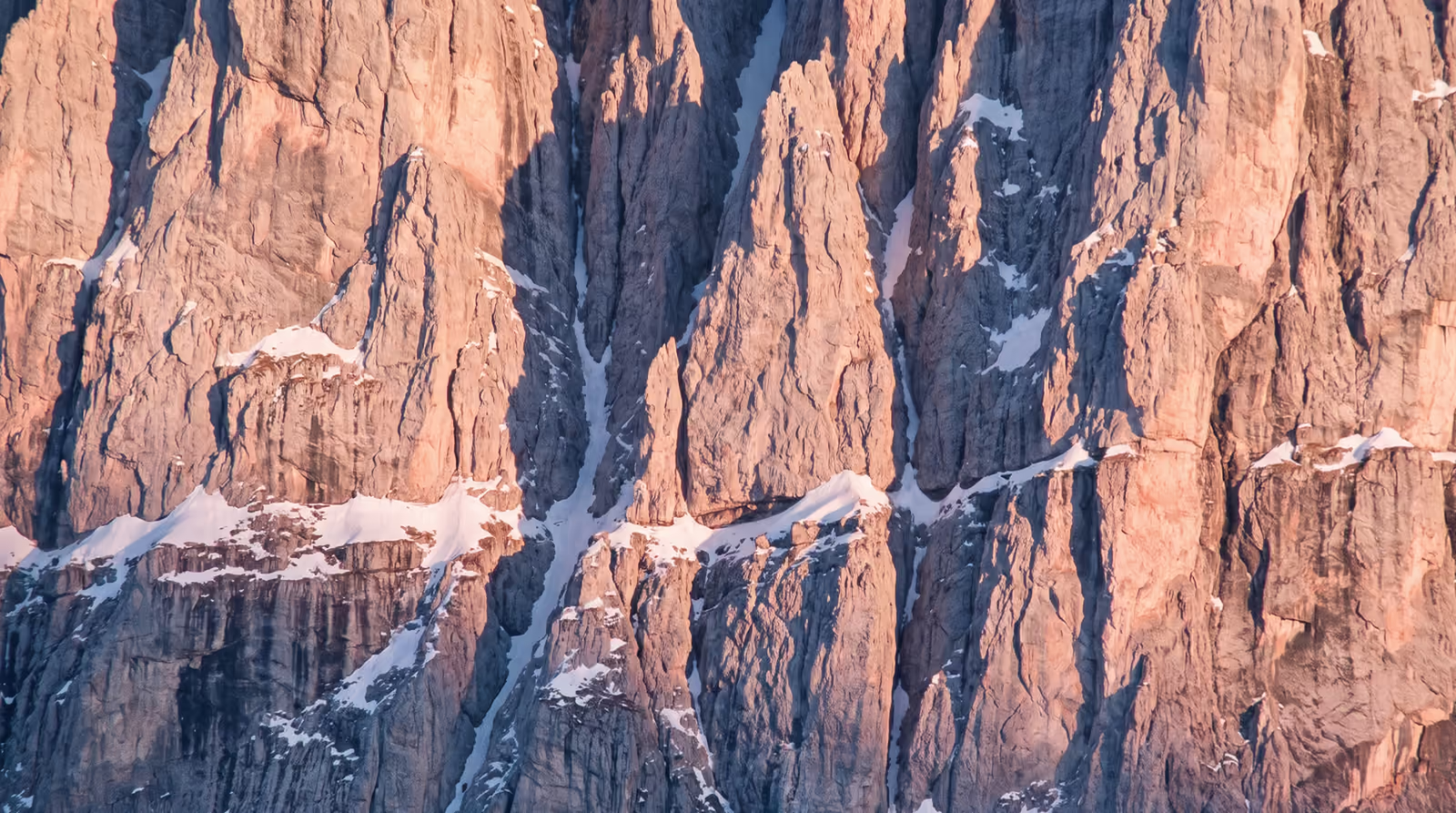
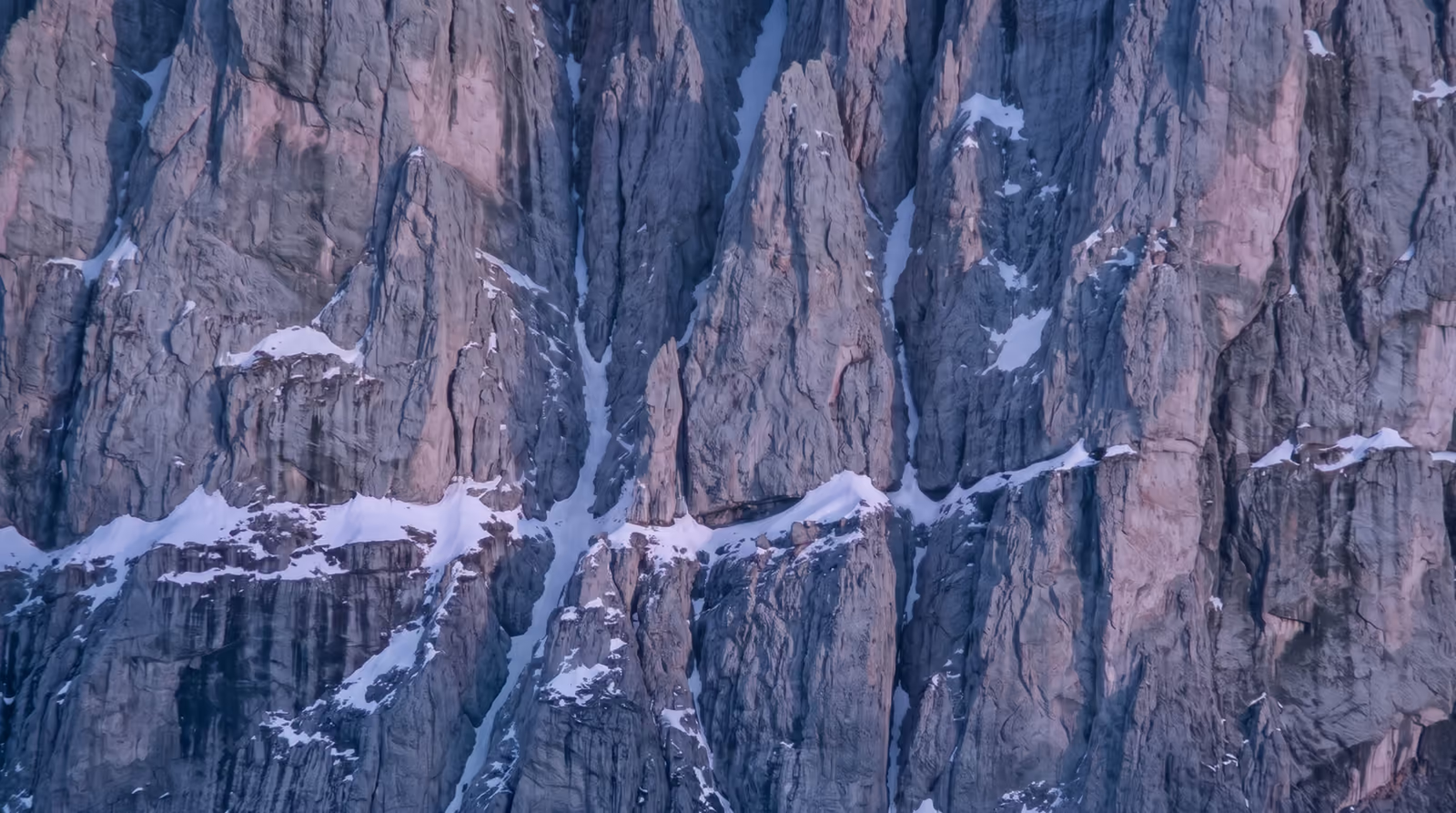
It's a Ladin word: it means “turning pink” 1. English calls it alpenglow; here it has always had its own name. It happens twice a day, when the sun is low and its light crosses more air: the blue gets lost on the way, the red remains. The rock does the rest: dolomite is pale, a calcium magnesium carbonate described in 1791 by Déodat de Dolomieu 2, and it takes on the colour of the light it receives.
At dawn, the walls facing east light up: from Cortina, the Tofane. At sunset, those facing west: Pomagagnon, Cristallo, Sorapiss.
The last one to go out changes with the season.
Today it's Sorapiss, at 16:39. On 21 December, Tofana di Dentro, at 16:33. On 21 June, Croda Rossa, at 21:12. Today, when the sun leaves the bell tower, the peaks keep it for another 1 hour and 15 minutes.
How we calculate it.
Here, the enrosadira begins when the sun drops below 4 degrees and ends when the last peak loses direct light. It holds for a clear sky; the margin is a few minutes.
Since 2009 the Dolomites have been a UNESCO World Heritage Site 3.
Sources
- 1 Wikipedia (Italian), “Enrosadira”
- 2 Wikipedia (Italian), “Déodat de Dolomieu”
- 3 Dolomiti UNESCO, “Dolomiti Settentrionali” (in Italian)
Updated 18 November 2026